Fire Escape Inspection Westchester
- Licensed and Insured
- Mon to Fri 8 AM to 6 PM
- Emergency Response Available

Fire Escape Repair in Westchester, NY
Rusted stair stringers, loose wall anchors and cracked platform brackets will not wait for the next five-year certification. Our licensed and insured crew repairs fire escapes on multifamily and mixed-use buildings across Westchester County, working from the engineer’s findings and finishing with a re-inspection so every repair is on record.
- Structural Welding In-House
- Engineer Re-Inspection
- Emergency Make-Safe
What Is Fire Escape Repair?
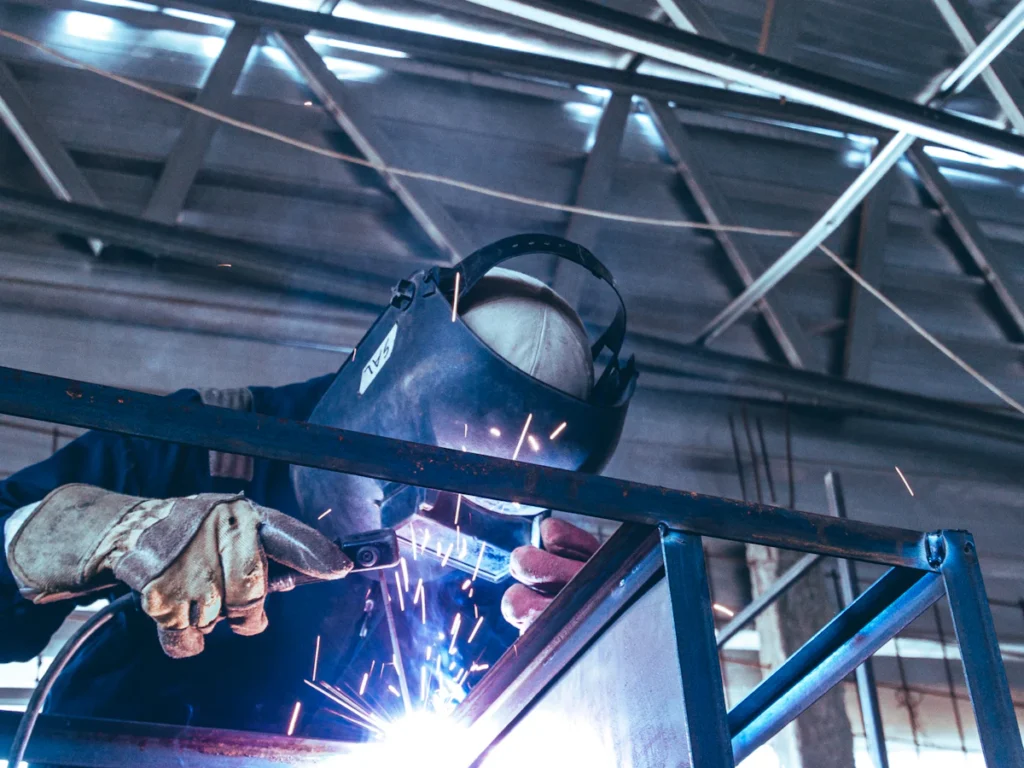
Fire escape repair is the structural work that returns a damaged fire escape to safe, usable condition. It covers welding cracked or corroded steel, re-anchoring platforms to the masonry, replacing stair treads, slats and railings, and renewing worn bolts and connections. In Westchester the work follows a registered design professional’s report and ends with a re-inspection, so the fire escape can be certified.
Need the report first? Start with a five-year fire escape certification and we will repair whatever it finds.
Make It Safe
Close unsafe levels and protect the ground below.
Repair the Steel
Weld, re-anchor and replace what failed.
Re-Inspect
The engineer checks the work and signs off.
Fire Escape Warning Signs Westchester Owners Should Not Ignore
Most fire escape failures give a warning first. This is how our engineers read the signs owners and supers report to us, and how quickly each one needs attention.
| Warning sign | What it usually means | How urgent |
|---|---|---|
| Cracked or bulging brick around a wall anchor | Rust jacking, the anchor is rusting inside the wall and pushing the masonry apart | Stop using |
| A platform that dips, sags or bounces underfoot | Failing brackets, corroded slats or loose connections under the landing | Stop using |
| Cracked, bent or missing stair treads | Treads have rusted through or broken away at the stringer | Stop using |
| Steel flaking off in layers or swelling at joints | Section loss, the member is getting thinner as it corrodes | Repair soon |
| Missing, loose or rusted-through bolts and rivets | Connections no longer hold the parts together as designed | Repair soon |
| A railing that moves when you lean on it | Broken welds or loose posts at the platform edge | Repair soon |
| Rust streaks running down the facade | Water is trapped where steel meets masonry | Inspect soon |
| Paint peeling back to bare steel | The coating has failed and corrosion will follow | Inspect soon |
See a Stop using sign? Keep tenants off that level and call (917) 355-8556. Unsafe fire escapes anywhere in Westchester get an emergency response, and faded or peeling paint can be handled by our fire escape painting and rust removal crew.
Fire Escape Repairs We Handle Across Westchester
Every repair is done by our own licensed and insured welders and ironworkers, not a subcontractor, and every one is matched to a line in the engineer’s report.
Structural Welding
Cracked stringers, broken railing posts and failed bracket welds are cut back to sound steel and rewelded, with new plate added where rust has thinned the section.
Wall Anchor and Bracket Repair
Rusted or loose anchors are replaced with new through-bolted or masonry anchors, and the brick around them is rebuilt so each platform is held tight to the wall again.
Stair Stringer and Tread Repair
Rusted-through treads are replaced to match the originals, and stringers that have lost steel are reinforced or renewed so every flight carries its load.
Platform and Balcony Repair
Sagging platforms get new slats or grating, fresh support angles and tightened connections, leaving a landing that is level and solid underfoot.
Railing and Guard Repair
Loose posts, broken pickets and wobbly guards are rebuilt to hold firm, closing the gaps a person could slip through.
Bolt, Rivet and Connection Renewal
Missing and corroded bolts and rivets are replaced with new hardware, and every joint we work on is checked for tightness before we leave.
Drop ladders and counterbalance stairs have their own service, see fire escape ladder repair in Westchester. Coatings are handled through fire escape painting.
Why Wall Anchor Repair Comes First on Westchester Fire Escapes
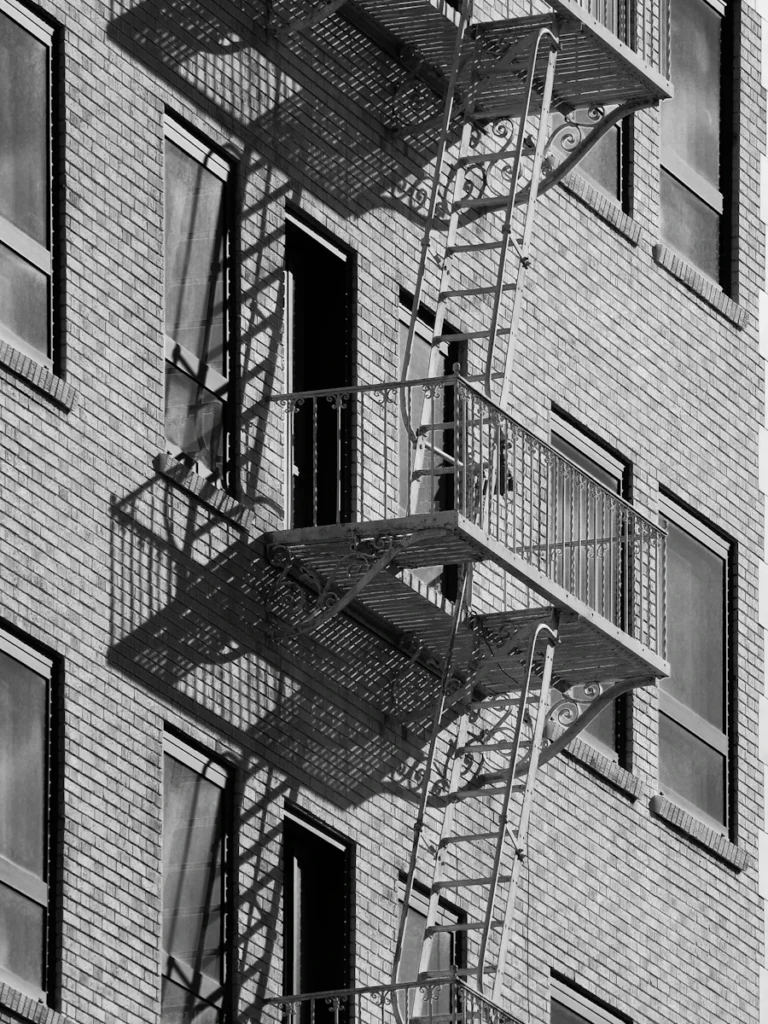
A fire escape is only as strong as its grip on the building. On the older brick walk-ups found in Yonkers, Mount Vernon, New Rochelle and Port Chester, the anchors were set into the masonry generations ago, and water has been working on them ever since.
As steel rusts it expands, and rust trapped inside a wall can push brick apart. Engineers call this rust jacking. From the sidewalk it looks like a cracked brick or a brown stain, but behind it the anchor may have lost much of its strength.
Our crew opens the masonry, removes the corroded anchor and sets a new one, then rebuilds the brick and seals the joint against water. Yonkers asks that anchor connections be confirmed by internal inspection, load testing or a duplicate connection, so every anchor repair is planned with the engineer before work starts.
Signs an Anchor Needs Attention
- Cracked or displaced brick at the anchor point
- Rust stains running below the platform
- A platform edge pulling away from the wall
- Mortar joints washing out around the steel
Repair or Replace a Fire Escape in Westchester?
Most fire escapes can be repaired, and repair is usually the faster and lower-cost route. Replacement only makes sense when the damage runs through the whole structure.
Repair Is the Right Call When
- Damage is limited to certain levels or parts
- Stringers and frames still have most of their steel
- Anchors can be reset into sound masonry
- The layout still gives tenants a usable way down
Replacement Is Worth Pricing When
- Corrosion has thinned members on most levels
- Repairs would rebuild the structure piece by piece
- Cracked cast iron parts cannot be safely welded
- The same repairs keep failing at the same points
Our engineer gives you a straight answer. If repair will do the job, we will not sell you a new fire escape.
From Report to Sign-Off, How a Westchester Fire Escape Repair Runs
Structural repairs on a fire escape are code work, not handyman work. This is the path every job follows with us.
Scope From the Report
We price the repair from the engineer’s findings, so you pay for what the report calls for and nothing it does not.
Permit Where Required
Many Westchester municipalities require a building permit for structural fire escape work. In Yonkers, major repairs are done under a permit through the Department of Housing and Buildings, and we prepare the filing.
Make Safe and Protect Below
Unsafe levels are closed, the sidewalk or yard is protected and loose pieces are taken down before repair work begins.
Repair and Document
Our crew completes the repairs and photographs each one, so the engineer can see exactly what was done at every location.
Re-Inspection and Sign-Off
The engineer re-inspects the repaired areas. Where the city asks for it, a licensed engineer confirms the repaired fire escape is safe by affidavit, and a load test is arranged when one is needed.
Fire Escape Repair in Occupied Westchester Buildings
Nearly every fire escape we repair is on a building where people live, so the job is planned around them.
- Written notice for tenants whose windows open onto the work
- A fire watch and extinguishers on hand during welding and cutting
- Windows and sills shielded from sparks and slag
- Sidewalk, yard or alley protected below the work area
- Work phased level by level so tenants keep a way out
- Work area cleaned and checked before the crew leaves each day
Emergency Fire Escape Repair in Westchester
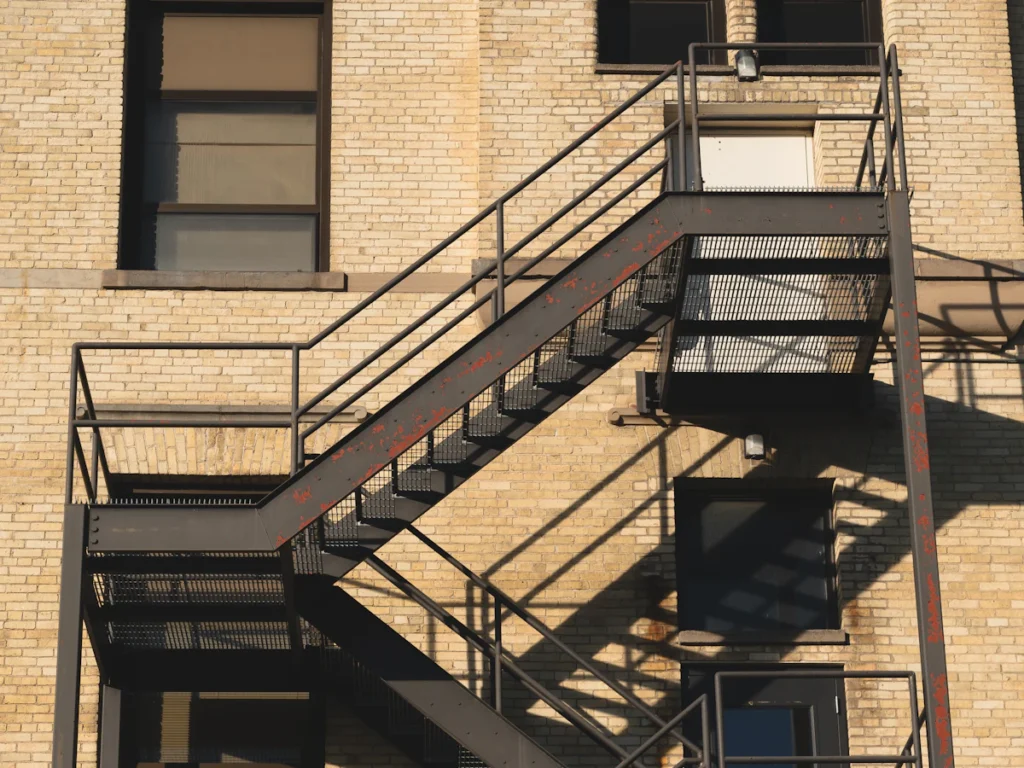
A platform pulling away from the wall or a stair that has given way is an emergency. Call us and our crew will make the area safe, secure or take down the failing section and plan the permanent repair with the engineer.
Related Fire Escape Services in Westchester
Repairs often go hand in hand with one of these services, and the same team handles each one.
Once the steel is sound, a proper prep, prime and finish system keeps rust from starting the damage over again.
Drop ladders and counterbalance stairs that stick, drag or will not return are repaired, adjusted and tested.
When repairs are part of a fire inspector’s citation, we fix the cited items and help you close the violation.
Fire Escape Repair FAQs for Westchester Owners
Answers to what owners, supers and managing agents ask before booking a repair.
How much does fire escape repair cost in Westchester?
It depends on what the report finds. Replacing a few bolts and treads is a small job, while re-anchoring several platforms with masonry work is a larger one. We price from the engineer’s findings and give you a written scope before any work starts.
Do I need a permit to repair a fire escape in Westchester?
Structural repairs often need one, but the rule is set by each city, town or village. Yonkers, for example, requires major fire escape repairs to be done under a permit from the Department of Housing and Buildings. We check the local requirement and handle the filing.
Can you repair a fire escape without an engineer’s report?
Small maintenance such as replacing a loose bolt can be done right away. Structural repairs should follow a registered design professional’s findings, because the work has to be checked and signed off afterwards for your certification.
How long does a fire escape repair take?
Many repairs are finished in a few days on site. Larger jobs with anchor and masonry work across several levels take longer, and permit review can add time before work begins. You get a schedule along with your scope.
Can tenants use the fire escape while it is being repaired?
Levels under active repair are closed, and the rest stays usable where it is safe. We phase the work so the building keeps a way out wherever the layout allows.
Is welding on a fire escape safe for an occupied building?
Yes, with the right precautions. Our crew keeps a fire watch and extinguishers on hand, shields windows from sparks and checks the area after every welding or cutting session.
Will my fire escape need a load test after repairs?
Only when the engineer or the fire code official asks for one, usually after major structural repairs or where the strength of a part cannot be confirmed by looking at it. We set up and run the test when it is required.
Do you repair old cast iron fire escapes?
Yes. Many older Westchester fire escapes have cast iron parts that cannot be welded reliably, so cracked castings are replaced with matching steel or new cast pieces rather than patched.
Book Fire Escape Repair in Westchester
Share the engineer’s report or describe what you are seeing, and we will plan the repair, handle any permit and arrange the re-inspection. Monday to Friday, 8 AM to 6 PM, with emergency response for unsafe fire escapes.